From raw upload to a structured, cited matter
Deadlines, quiet matters and overdue actions, ranked
Asserted facts cited to a source paragraph
The problem
Solo attorneys and small firms don't lose matters to bad lawyering. They lose them to administration. A new matter arrives as a scattered pile: a forwarded email thread, three scanned PDFs, a signed engagement letter, a voice note from the client. Assembling that into something you can actually work (parties, dates, a chronology, the documents in order) is an hour of manual sorting before a single billable thought happens. Off-the-shelf practice management tools assume the file is already clean. It never is.
In short
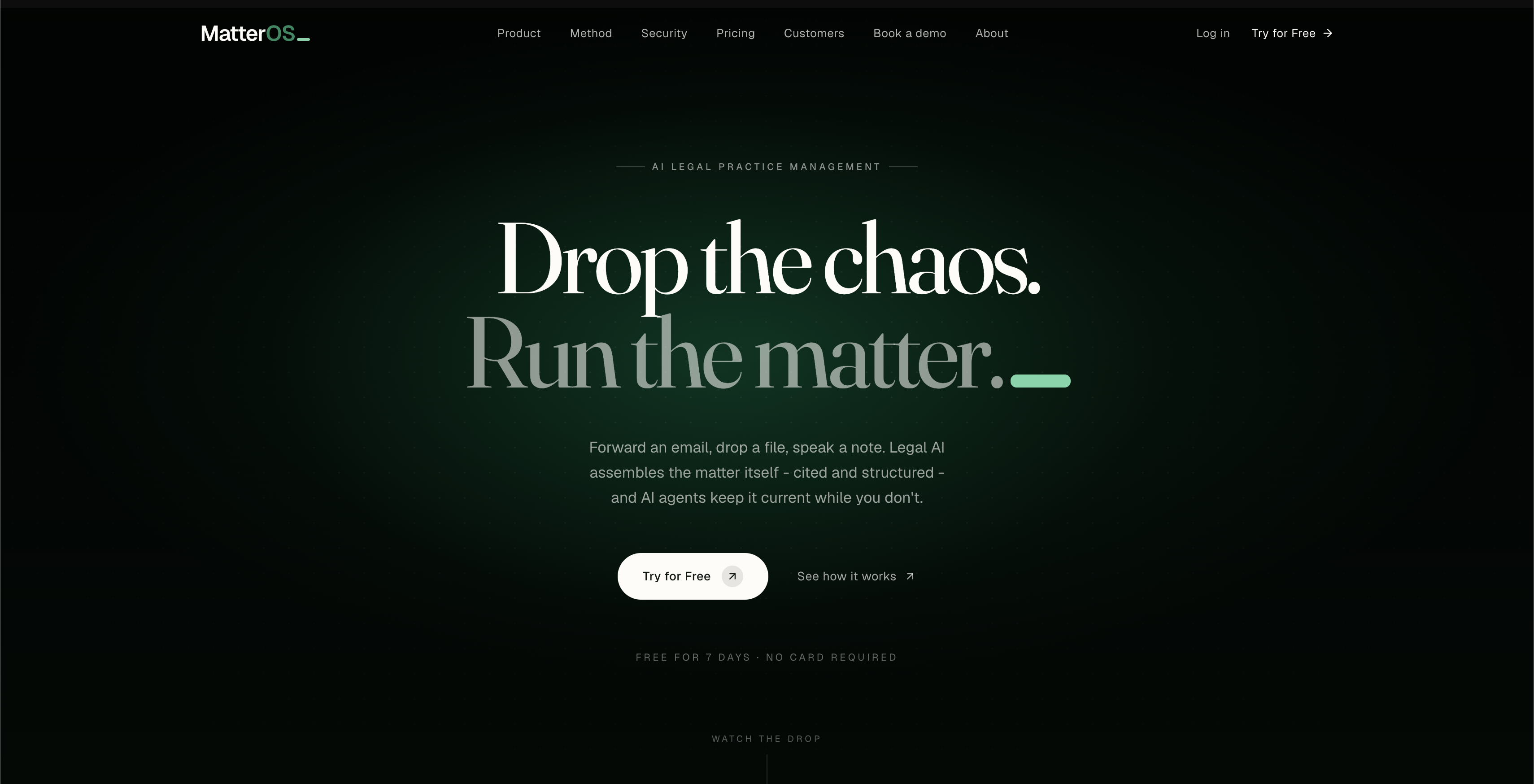
A practice management system for solo attorneys and small law firms, designed around how matters actually arrive, as a mess of PDFs, scans, emails, and voice notes. MatterOS ingests the chaos, structures the file, builds the chronology, and surfaces what needs the lawyer's judgment next. Every asserted fact is cited back to its exact source paragraph; the assembly is the machine's job, the decision stays the lawyer's.
- Matter assembled and cited in ~90 seconds, regardless of input shape
- Single ranked queue across deadlines, quiet matters, and overdue actions
- Hand-built client portal that runs on the firm's own subdomain
How it was built
- 01Ingest the chaos as-is.Drop anything: PDFs, scans, email exports, images, voice notes. OCR and document parsing normalise every input into text the system can reason over, so the lawyer never has to retype or reformat to get started.
- 02Extract and structure.An extraction pass pulls parties, dates, amounts, and obligations into a structured matter record, then assembles a chronology from the documents themselves rather than from memory.
- 03Cite every fact.Every asserted fact links back to the exact source paragraph it came from. Nothing is taken on faith; the lawyer can click any claim and land on the line that supports it. That is the difference between a tool you can sign your name behind and one you can't.
- 04Rank what needs judgment.A single cockpit surfaces one ranked queue across every matter (the deadline that bites, the matter that's gone quiet, the action that's overdue) so the day starts with priorities instead of six open tabs.
- 05Work overnight, hand over by morning.Background agents do the assembly while the lawyer sleeps, and a hand-built client portal on the firm's own subdomain gives clients a branded place to see status and exchange documents.
Under the hood
Results
- A matter goes from raw, mixed-format upload to a structured, cited file in roughly ninety seconds, regardless of how messy the inputs were.
- The lawyer works from one ranked queue instead of reconstructing priorities across email, calendar, and a filing cabinet every morning.
- Because every fact is cited to its source, the output is trustworthy enough to act on, and defensible if it's ever questioned.
- Clients get a branded portal on the firm's own subdomain, which reads as a real firm system rather than a generic SaaS login.
Questions